Programs
What we run, and what came of it.
Every program here started with students noticing a gap in what people know about their own health, and deciding to close it. Two more are on the way.
100+students made the cards
Health Card Initiative
Plain-language health cards, in the language people read at home.
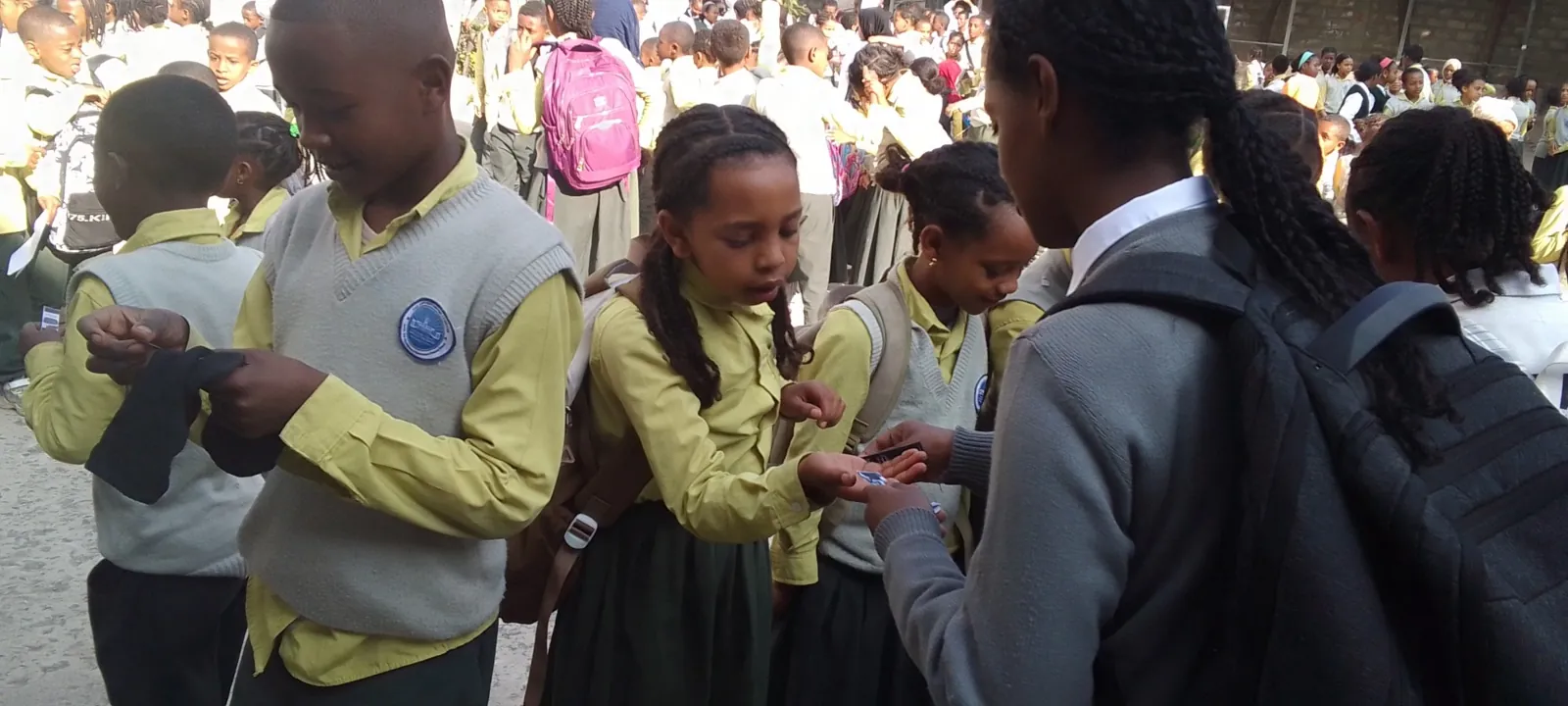
Our first program and still our biggest. Students write short, illustrated cards on the conditions families ask about most. Local students translate them, and partner schools and institutions hand them out in rural communities, along with presentations and basic supplies.
How it works
- 1
Written by students
100+ students researched, wrote and designed the cards, with graphics and short presentations to go with them.
- 2
Translated locally
Students in the communities we work with translated each card, so it reads the way people actually speak.
- 3
Handed out by people they know
25+ schools, colleges and institutions distributed the cards in rural communities.
Thousandsof people educated
Stroke Awareness Campaigns
Teaching people to recognise a stroke, where help is far away.
With neurology organizations in Africa, we ran campaigns in rural communities on the warning signs of a stroke and what to do in the first minutes. Where the nearest specialist can be hours away, that knowledge is often what matters most.
How it works
- 1
Built with neurologists
Campaign material was developed alongside partner neurology organizations.
- 2
Taken to rural communities
Sessions were held where stroke knowledge is lowest and care is hardest to reach.
- 3
Thousands reached
Thousands of people learned to spot the signs of a stroke and act fast.
70+interns
Internship Program
Interns who wrote the guides they wished existed.
Our interns took on the part of healthcare that confuses almost everyone: insurance, billing, referrals and where to go without a doctor. They researched it and turned it into guides that families can follow.
How it works
- 1
Research
Interns dug into how healthcare systems actually work, and where people get stuck.
- 2
Write
They turned it into plain-language guides to navigating the system.
Coming soon
Healthcare Action Lab
Six weeks, six students, one real healthcare problem.
A six-week program where teams of six students, each with a different skillset, take on a real healthcare advocacy challenge. They build a solution, test it with real people, launch it and measure what happened.
See the full six weeksHow it will work
- 1
Define and design
Weeks 1 and 2: pin down the problem, research it, and design one integrated solution with a plan to measure it.
- 2
Build and test
Weeks 3 and 4: build a working prototype, then pilot it with real users and revise.
- 3
Launch and measure
Weeks 5 and 6: launch it publicly, measure the impact, and present it at Demo Day.
Coming soon
Public Health Academy
How healthcare really works, ending in a capstone.
The Academy will teach students how healthcare and public health actually work: who gets care, who doesn't, and why. It will end with a capstone project on a question each student chooses.
Capstones will be backed by institutions including the University of Pennsylvania, Drexel University, the University of Minnesota and several government health departments.
How it will work
- 1
Foundations
Students will learn how healthcare systems, access and prevention fit together.
- 2
A question
Each student will pick a health problem to dig into.
- 3
A capstone
The Academy will end with a capstone project that answers it.
Chapter programs
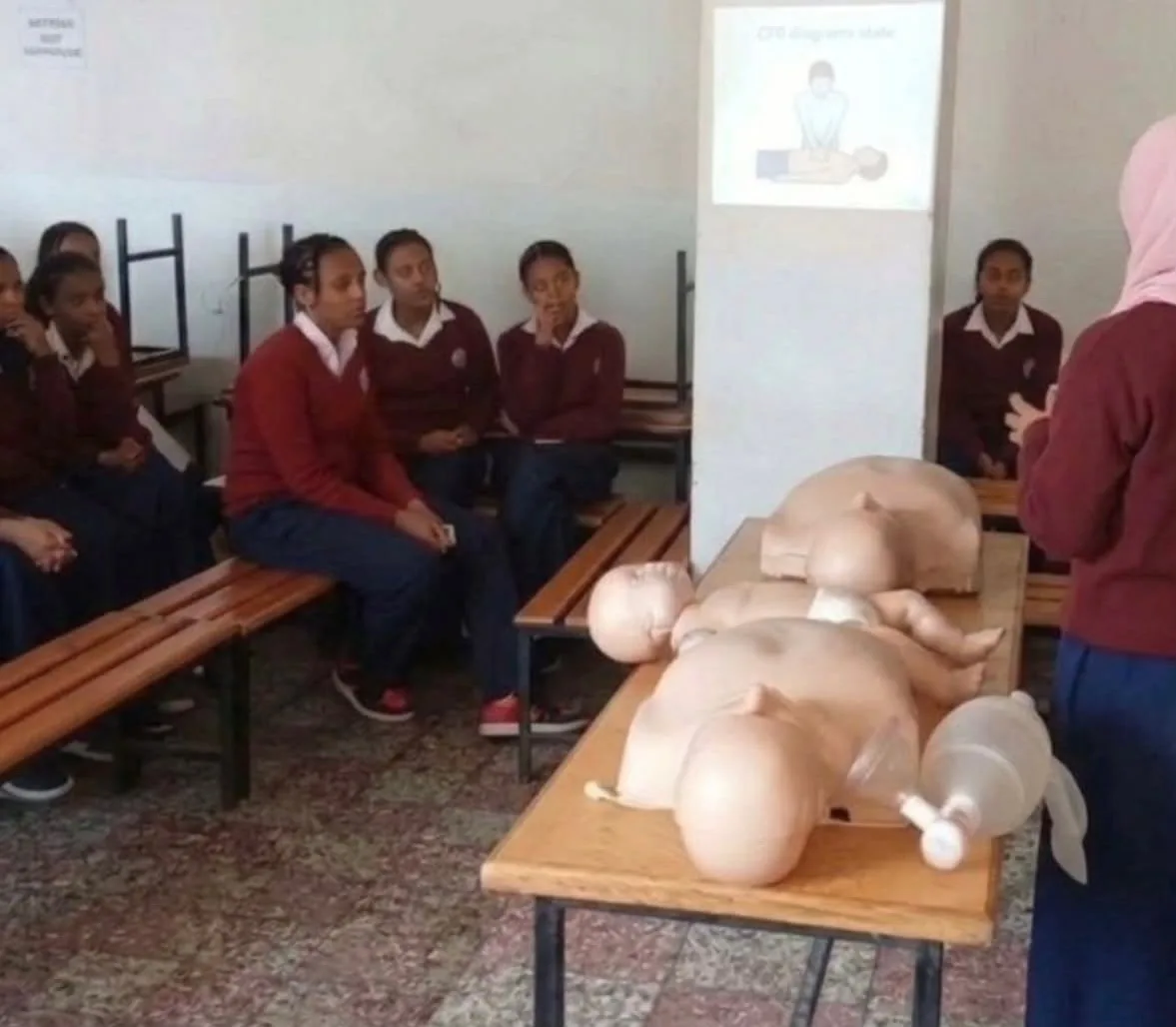
Across 175+ chapters, every one runs some mix of the same four programs, shaped to the community it serves. Medical education includes hands-on sessions like CPR training.
Free Health Outreach
We run community wellness checks and pop-up clinics, bringing medical resources to the people who have the hardest time getting to them.
Medical Education
We hold workshops on preventative care, cardiovascular wellness, kidney health, diabetes, and mental health, so families can catch problems early.
Volunteer Mobilization
We train students to run health programs in their own communities, then give them the materials and the support to keep going.
Healthcare Partnerships
We work with clinics, hospitals, and medical institutions so our chapters plug into care that already exists instead of duplicating it.